Why the Offside Line Moves with the Play
Why the offside line moves with the play: learn how the ball, second-last opponent, the halfway line, and a teammate’s touch shape an offside call.
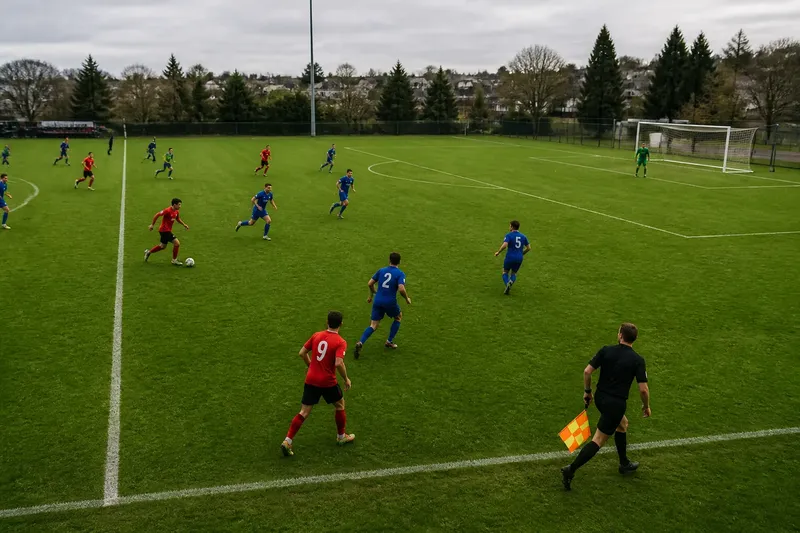
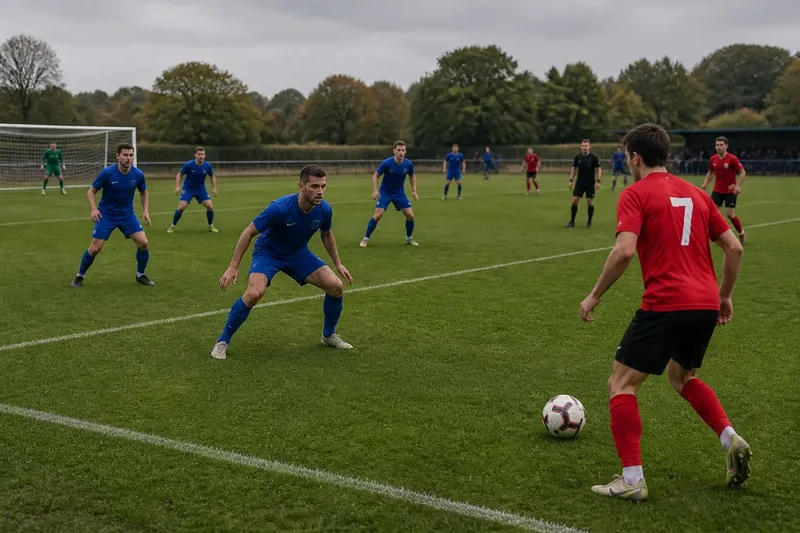
A forward waits near the halfway line as a teammate carries the ball toward goal. One defender steps up, another drops back, and the forward seems to cross an invisible boundary. To understand why the offside line moves with the play, track the ball, the second-last opponent, and whether the attacker is in the opponents’ half when a teammate touches the ball.
What sets the offside line?
An attacker is in an offside position only if, at the relevant moment, part of their head, body, or feet is in the opponents’ half and nearer the opponents’ goal line than both the ball and the second-last opponent. The halfway line belongs to the attacker’s own half, so standing on it is not an offside position.
The ball or the second-last opponent sets the reference point, whichever is nearer the goal line. Arms and hands do not count, including a goalkeeper’s. “Second-last opponent” is more accurate than “last defender”: the goalkeeper counts as an opponent, but is not automatically the player who determines the line.
If the goalkeeper has come out and only one other opponent is closer to the goal line than the attacker, that outfield player is the second-last opponent. If the goalkeeper is behind the play, the goalkeeper may be the last opponent and a defender may be second-last.
Why does the line move with the ball?
The ball can be closer to the goal line than the second-last opponent, and it then sets the forward limit for an onside position. As a teammate carries or passes the ball, the reference point can shift, so judging an attacker against defenders alone can mislead.
Say a midfielder carries the ball forward while a teammate runs ahead of the second-last opponent but stays in their own half. That teammate is not in an offside position yet. If the midfielder touches a forward pass after the runner has entered the opponents’ half and the runner is then beyond both the ball and the second-last opponent, the runner is in an offside position at that instant; a penalty still depends on becoming involved in active play.
Now imagine the midfielder passes backward to a teammate behind the ball. That receiver can be nearer the goal line than the second-last opponent and still be onside, because the ball is farther from goal than the receiver.
When is an attacker’s position judged?
The position is judged at the instant a teammate plays or touches the ball, not when the intended receiver reaches it. If a receiver starts onside, they can run past defenders to collect that pass without becoming offside from it.
A later touch by a teammate creates a new moment to assess position. For instance, imagine a pass is headed toward an attacker and another teammate touches it before it arrives. The attacker’s position is assessed at that later touch, with the play’s context taken into account.
Does an offside position automatically mean a foul?
No. An attacker in an offside position commits an offense only by becoming involved in active play. That can mean playing or touching the ball, interfering with an opponent, or gaining an advantage in circumstances covered by the rule.
Interfering with an opponent can include blocking their line of vision or challenging them for the ball. An attacker who is beyond the line but leaves the play alone may not be penalized. That is why an assistant referee can keep the flag down even when a runner appears to be ahead of the defenders.
A rebound or deflection can also matter. If a player in an offside position plays the ball after it rebounds from the goalkeeper or goal frame, or is deflected by an opponent, the player may be penalized for gaining an advantage. The decision depends on the circumstances, not position alone.
What changes if a defender plays the ball?
A defender’s position counts when the offside position is checked. A defender stepping forward after the pass cannot make a receiver who was onside at that moment offside; a defender retreating afterward cannot erase an offside position either.
An opponent’s deliberate play can change the assessment because the attacker may then be receiving the ball from that play rather than the teammate’s earlier pass. A deflection or rebound is not treated the same way, and a deliberate save has its own exception: an attacker in an offside position who receives the ball after an opponent’s save may still be penalized for gaining an advantage.
The distinction is about the opponent’s action, not simply whether the ball touched them. A defender deliberately playing a pass differs from the ball unexpectedly striking them. In close calls, the referee team considers the action under the applicable rules.
How do restarts affect offside?
A player cannot be penalized for an offside offense directly from a goal kick, throw-in, or corner kick. The exception applies to the initial receipt from that restart; it does not last for the rest of the attack. If a teammate touches the ball afterward, the usual position and involvement checks apply.
An attacker can therefore stand beyond the defenders to contest the initial delivery from one of these restarts. A later teammate’s touch can bring the ordinary offside rule back into play.
What questions help clarify close offside calls?
Can a player be offside in their own half?
No. A player cannot be in an offside position in their own half, and the halfway line is part of that half. The player must be in the opponents’ half when a teammate plays or touches the ball.
Is a player level with the second-last opponent offside?
No. A player level with the second-last opponent is not nearer to the goal line than that opponent. Being level with the ball also counts as onside for this comparison.
Can a player score while in an offside position?
Position alone does not decide the call. If a player in an offside position receives a teammate’s pass and plays the ball, they have become involved; a direct receipt from a qualifying restart is an exception.
Why might the assistant referee wait to raise the flag?
The assistant may wait when it is not yet clear whether an attacker in an offside position will become involved. Delaying can avoid stopping an attack before the relevant action is clear.
How can you read the offside line during an attack?
Follow the ball, locate the second-last opponent, and check whether the attacker is in the opponents’ half at the instant of the teammate’s touch. Then compare the attacker with both the ball and the opponent, and consider separately whether the attacker joins the play.
Imagine a hypothetical attack with the ball and second-last opponent both in the opponents’ half, and a teammate still standing on the halfway line as the passer touches a forward pass. The teammate is not in an offside position at that touch because the halfway line is part of their own half. If the teammate runs forward and collects the pass, that run does not change the original position check; if instead the teammate had already entered the opponents’ half and was beyond both reference points at the touch, playing the pass would make them involved in the play. Keeping the halfway-line condition in view makes the moving offside line easier to judge without treating every forward run as a violation.