A High Line or a Deeper Block: Two Ways to Manage Space
A high line vs. a deeper block changes where a team accepts pressure. Learn what each approach asks defenders, midfielders, and the goalkeeper to manage.
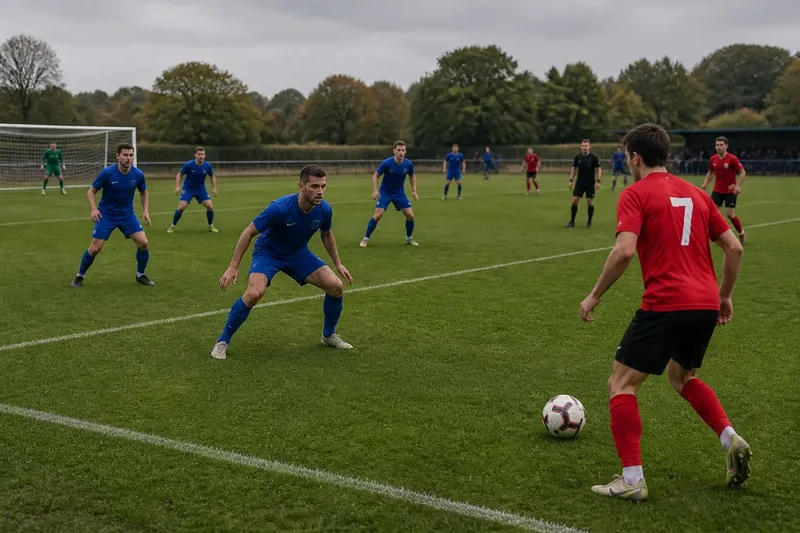
Watch a team lose the ball near midfield and you can see its defensive plan take shape in a few seconds. Some defenders step forward together, leaving open grass behind them; others retreat toward their own goal, inviting the opposition to advance before closing the space in front of the penalty area. A high line vs. a deeper block is not simply a choice between courage and caution. It is a choice about where a team will try to control space, and which risks it is prepared to manage.
To read that choice, follow the defenders’ starting positions, then watch how the rest of the team supports them. A line only works as part of a group: midfielders, forwards, and goalkeeper all influence whether the spaces around it stay manageable.
Where does the team want to defend?
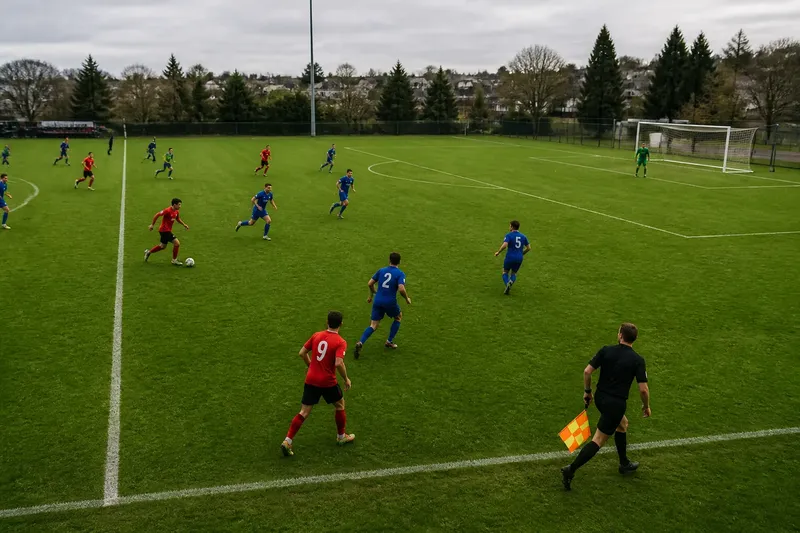
A high defensive line starts defenders relatively close to the halfway line, or at least well away from their own penalty area. The team tries to keep the playing space compact. If its forwards press the ball and its midfielders move up behind them, opponents have less room to receive and turn between the lines.
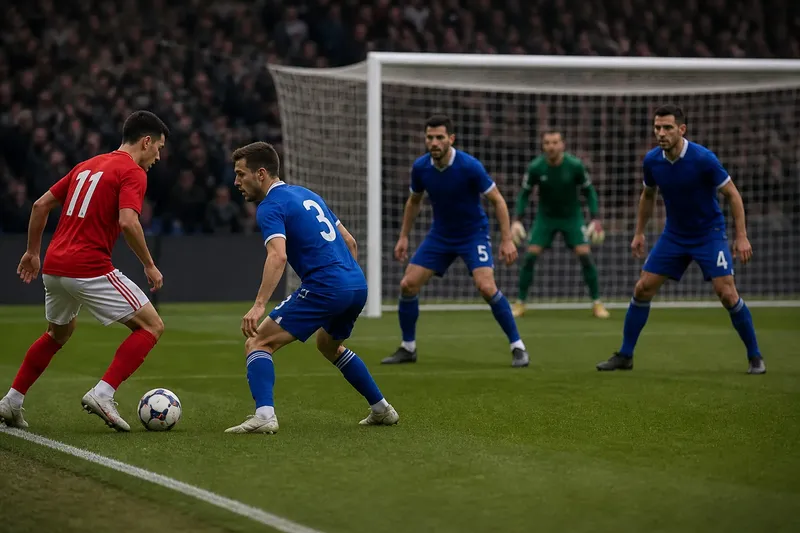
A deeper block starts nearer the team’s own goal. Its defenders give the opponent more territory to approach, but aim to make the space near the goal crowded and difficult to enter. The midfield line often drops with the back line, reducing the room available for passes through the middle.
These are positions in a phase of play, not permanent formations. A side may press high after a goal kick, then retreat if the opponent beats the first pressure. Another may defend deep for long stretches but step forward when a loose pass creates a chance to challenge.
How does each approach shape the space?
With a high line, the main aim is to shrink the space in front of the defense. That can support an aggressive press: nearby players can challenge the ball while teammates block easy passes. When the group moves together, the opponent may be forced into a hurried pass, a long ball, or a turnover.
The cost is space behind the defenders. A pass over the top, a quick run into the channel, or a failed attempt to pressure the ball can expose that area. If one defender steps up while another stays back, the line becomes stretched and runners may find room to move toward goal.
A deeper block trades some pressure on the ball for protection closer to goal. Defenders can stay goal-side of attackers, and midfielders can screen passes into central areas. The opponent may have possession outside the block, but still struggle to find a clean route into the penalty area.
The trade-off is that a deep team can become pinned back. If it cannot hold the ball or move out after winning it, the opponent gets repeated chances to build attacks. A crowded penalty area can also leave room for shots from outside, crosses, or passes toward the edge of the box.
What must the whole team manage?
A high line depends on coordinated pressure. If the forwards close the ball but the midfield stays deep, opponents can pass into a large pocket between the two groups. If the defenders push up without pressure on the passer, that player may have time to pick out a runner behind them.
The goalkeeper’s position matters too. A keeper who stays ready outside the penalty area may be able to reach a long through ball before an attacker does. That role carries its own judgment: the keeper must read the pass, the runner, and the ball’s speed without leaving the goal exposed unnecessarily.
A deeper block asks for patience and close distances. Defenders need to track runs without opening gaps, while midfielders must protect the lanes into the box. The goalkeeper is more often positioned to deal with crosses and shots, though defenders still need to prevent opponents from delivering freely.
Players also need an escape route for the moment they win the ball. A forward positioned to receive a pass can help the team move up the field; without an outlet, clearances may return quickly and the defense must settle again. The ideal outlet depends on the players available and the opponent’s pressure.
How can you read the choice during a match?
Start by looking at the defenders before the opponent begins a settled attack. Are they near the halfway line, or already closer to their penalty area? Then check whether the midfielders are close enough to support them. The back line alone does not tell you whether the team is pressing or retreating.
- Notice the starting height: Look at where the deepest defenders stand when the opponent has controlled possession.
- Watch the first response: See whether nearby players close the ball quickly or drop into their positions.
- Check the gaps: Look for open space between the defense and midfield, and behind the defenders.
- Follow the goalkeeper: Note whether the keeper stays close to goal or moves forward to cover space behind the line.
- Observe what happens after a turnover: See whether the team presses to win the ball back or retreats to rebuild its shape.
- Look for a pattern, not one moment: A single counterattack or set piece may make a team’s usual line look different.
Say you are watching an invented match in which the blue team’s defenders stand near halfway when the red team has the ball. Blue’s forwards close the center-backs, its midfielders step up, and its goalkeeper waits outside the penalty area. If red plays a pass beyond the defense, blue’s keeper moves to meet it; the observable trade-off is clear: blue has compressed the midfield but left space behind its defenders to manage.
When does a team change its approach?
A team may choose its line according to the opponent’s strengths. If the other side has quick forwards who threaten the space behind, defenders may retreat or pressure the passer more tightly. If the opponent struggles to play through pressure, a higher line may help keep the action far from goal.
The score and match situation can influence the choice, but there is no automatic rule. A team protecting a lead might defend deeper to reduce the room for runs behind; it might instead press high to keep the opponent from building attacks. A side chasing a goal may push defenders up, while still needing enough cover to resist counterattacks.
Fatigue, player roles, and the quality of the opponent’s passing also matter. If the first line cannot press with enough energy, a high line may leave defenders exposed. If a deeper block cannot move together or clear pressure, it may spend too long defending near its own goal.
What questions help explain the difference?
Does a high line always mean the team is pressing?
No. A high line can be positioned far up the field without a coordinated press on the ball. If opponents have time to pass, the space behind the defenders may be exposed even though the team’s starting position looks aggressive.
Does a deeper block mean a team is playing defensively?
It describes where the team is organized without the ball, not how ambitious it is overall. A team can defend deep, win possession, and attack quickly with purpose.
What is the biggest visible risk of a high line?
Look for space behind the defenders, especially when the ball carrier has time to play forward. A through ball or a run into a channel can turn that space into a direct threat.
What is the biggest visible risk of a deeper block?
Watch how long the team remains close to its own goal and whether it can relieve pressure after winning the ball. If opponents can keep the ball nearby, they may create repeated deliveries or find room around the edge of the penalty area.
How can you compare the two without picking a winner?
When the ball changes hands, notice whether the defense moves toward the halfway line or retreats toward its own box. Then ask what that movement does to the space: does it compress the area around the ball, protect the goal, or leave a gap somewhere else?
Keep the goalkeeper and midfield in view, too. A high line is easier to understand when you see the keeper cover behind it; a deeper block makes more sense when you notice midfielders shielding the defenders. The same team can use both approaches, and the useful clue is how the group responds together.
For a quick match note, write down where the team begins defending, where the opponent finds room, and what happens after possession changes. Those observations make the high line vs. a deeper block more than a label: they show where each team accepts risk and how its shape is meant to control the next phase of play.