The Centre-Back and the Full-Back: Different Jobs in One Defensive Line
Understand centre-back and full-back roles by following their starting positions, defensive duties, and choices when the ball moves wide or inside.
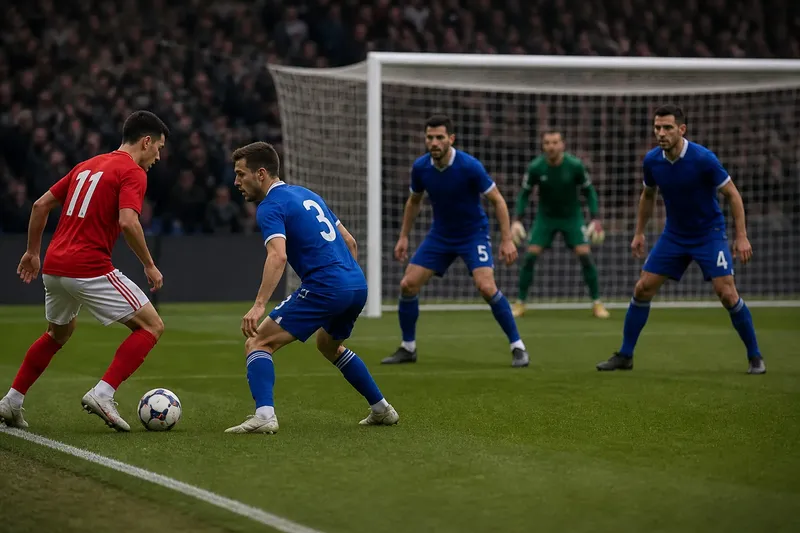
When a winger receives the ball near the touchline, one defender often moves out to meet them while another stays close to the middle of the goal. That split is a useful first clue to the centre-back and full-back roles: both protect the same defensive line, but they solve different problems from different starting places.
Those jobs can shift with a team’s formation and instructions. Still, watching where each defender begins, what space they guard, and who covers when one steps out makes the roles easier to read.
Where does each defender start?
Centre-backs usually begin in the central part of the back line, in front of the goalkeeper. A team may use two centre-backs side by side or add another in a back three. Their position puts them near the most direct route to goal and gives them a view of threats arriving from either side.
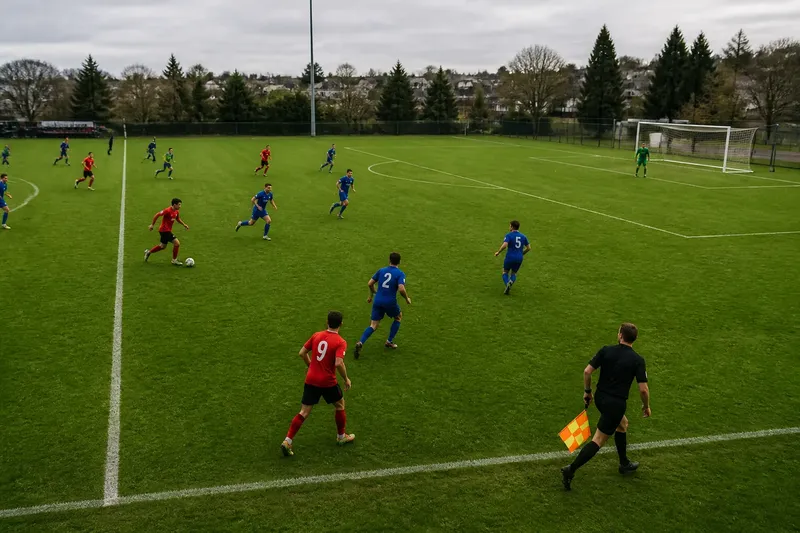
Full-backs start wider, near the left or right edge of the defense. Their first reference is often the opposing winger, but they also have to watch runners moving through the channel between the touchline and the centre of the pitch. In a back four, each full-back shares the line with two centre-backs; in a back five, the wide defenders are often called wing-backs and may start higher.
These are roles, not fixed addresses. A full-back may move inward during possession, and a centre-back may spread toward a flank to cover. The title on a lineup tells you the usual assignment, not every position a player will occupy during the match.
What does a centre-back protect?
The centre-back’s main defensive concern is the space in front of goal. They track central forwards, contest crosses, and try to prevent an attacker from receiving or turning in a dangerous area. When the ball is wide, a centre-back will often watch the opponents moving toward the penalty area rather than rush to the touchline.
That restraint matters. If both centre-backs chase the same wide threat, the middle can open for a pass or a late run. One defender may move toward the ball while the other stays goal-side of the central attacker, ready to cover the space behind.
Centre-backs also help organize the line. They can point out a runner, call for a teammate to shift, or adjust their position as the ball travels across the field. Their body angle often lets them see both the ball and the forwards they are responsible for, though no defender can keep every threat in view at once.
What changes when a full-back moves out?
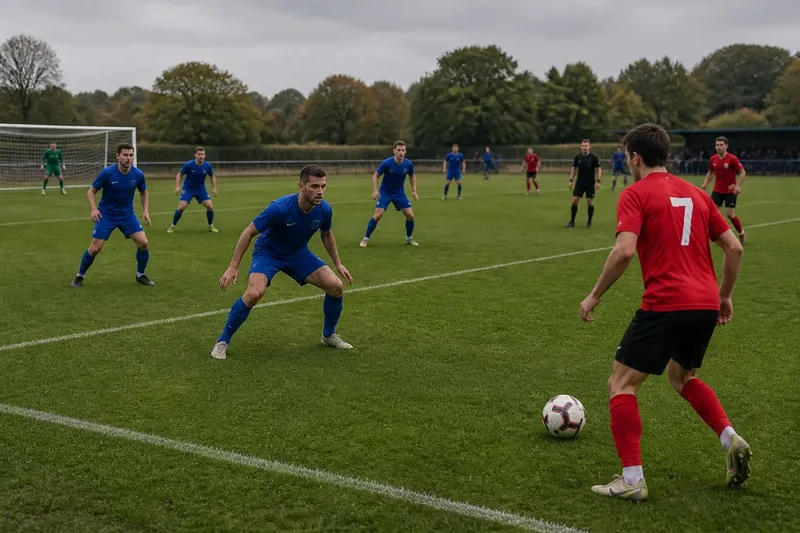
When an opponent receives the ball wide, the full-back is often the defender who closes them down. They need to judge the distance carefully: arriving too early can invite a quick touch past them, while giving too much room can let the winger cross or move inside. The centre-back nearby usually protects the inside route, so the full-back can focus on the space closest to the touchline.
The full-back also has to recognize when the danger is no longer directly in front of them. If the winger passes inward, the defender may follow the runner or hand that player over to a midfielder, depending on the team’s instructions. Behind them, a centre-back may slide toward the flank to cover the channel they have left open.
In possession, full-backs often offer an outlet along the sideline. They may stay deep to provide a safe pass or move forward to support an attack. That forward movement has a defensive cost: teammates must be ready to cover the vacated side if the ball changes hands.
How can you tell who should cover?
Look for the exchange between the defender confronting the ball and the teammate guarding the space behind. If the full-back steps toward a winger, notice whether the near centre-back shifts outward while another defender protects the middle. If the full-back stays back, the centre-back may remain closer to the central forward instead.
Imagine a left winger receives the ball near the sideline while a forward waits between the centre-backs. The left full-back moves out to limit the winger’s route, and the nearest centre-back edges left without abandoning the forward. The observable result to look for is a staggered pair: one defender pressures the ball, while another remains positioned to deal with a pass inside or a run toward goal.
Now watch what happens if the winger passes backward. The full-back may recover toward the line, giving the defense room to reset. If the pass goes inward instead, a midfielder may take over the ball-carrier while the full-back tracks a nearby runner. The handoff is often more revealing than the player’s starting position.
Which role suits different defensive choices?
A centre-back role suits a player who can read central danger, stay composed under pressure, and coordinate with teammates. Strength in aerial contests can help when crosses arrive, while reliable passing matters when the team wants to build play from the back. No single trait defines the role; the demands vary with the team’s shape and approach.
A full-back role suits someone comfortable defending wide space and adjusting quickly between one-on-one pressure and covering inside. Stamina and good timing can help because the role may involve repeated movement between defensive and attacking positions. Some full-backs are asked to advance often; others are expected to hold their position and protect the flank.
In a back three, the outside centre-backs may defend wider areas than centre-backs in a back four. A wing-back may also be positioned higher than a conventional full-back. These variations blur the labels, but the underlying question remains useful: who engages the wide player, and who protects the central route to goal?
What should you watch for during a match?
Does the full-back stay wide or move inside?
Watch the defender’s position when their team has the ball. Staying wide can provide an open passing lane; moving inside can add support near the center of the field.
Who steps toward a winger?
In many back-four systems, the full-back closes down the winger first. If a midfielder takes that assignment instead, note how the full-back adjusts to protect the space behind or inside.
How do the centre-backs react to a wide attack?
Look for one centre-back to shift toward the ball while staying aware of the central forward. The partner may remain closer to goal, preserving cover rather than following the same threat.
What happens after the full-back advances?
Check which teammate moves into the space the full-back has left. A centre-back, midfielder, or another defender may cover it, depending on the team’s plan and the position of the ball.
How do you choose what to follow?
To understand the centre-back and full-back roles, begin with one side of the defensive line and follow the relationship between its two defenders. Track the full-back when the ball goes wide; then glance at the nearest centre-back to see how the central space is protected. If you want to understand organization, focus on the centre-backs’ adjustments. If you want to see how a team handles a winger, stay with the full-back and watch for support behind them.
The most useful cue is not simply who makes a tackle. It is how the other defender responds before, during, and after that challenge. Once you see that coordinated shift, the defensive line looks less like four separate players and more like a set of linked responsibilities.